The practical answer.
Give a battery supplier the space, wiring, protection and installation constraints needed for a realistic pouch-pack proposal.
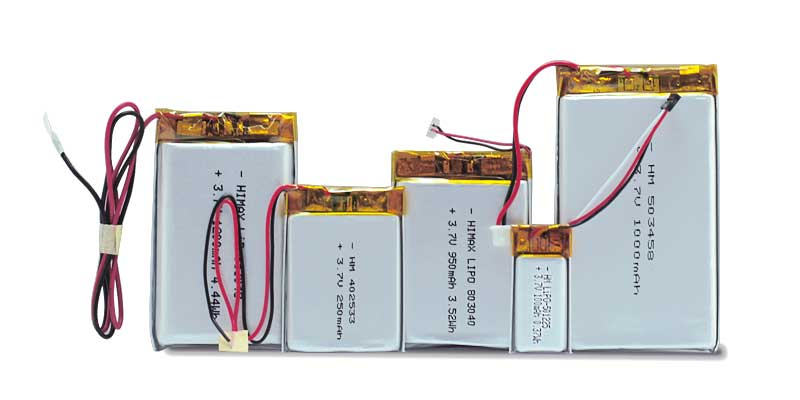
Describe the available space completely
A thin battery proposal begins with a clear description of the space inside the finished device. Provide the maximum permitted length, width and thickness, but also show mounting features, nearby parts, cable exits and assembly access. Identify any surfaces that may contact the pack. The battery supplier needs to know which dimensions are fixed and which may change during product development. A simple rectangular volume rarely captures all the constraints that decide whether a pouch-based assembly can be integrated successfully.
Include every component in the envelope
The pouch cell is not necessarily the entire battery assembly. Protection electronics, insulation, tabs, wires, connectors and any protective carrier also occupy space. Ask whether quoted dimensions refer to the bare cell or the finished pack, and request a controlled drawing for the proposed product. Make room for the supplier's required installation clearances and dimensional tolerances. Do not assume that a nominal cell thickness is the maximum installed thickness or that a cable can bend immediately at its exit.
Discuss mechanical protection early
Tell the supplier how the device is handled, transported, serviced and assembled. Identify possible bending, compression, abrasion or impact loads in normal use. Pouch cells should be incorporated through an engineered protective arrangement; they should not be treated as flexible structural parts. Ask the qualified battery and product teams to review the mounting method and any adhesive or support materials. Resolve how the battery is protected from sharp edges and heat sources before the enclosure design is released for tooling.
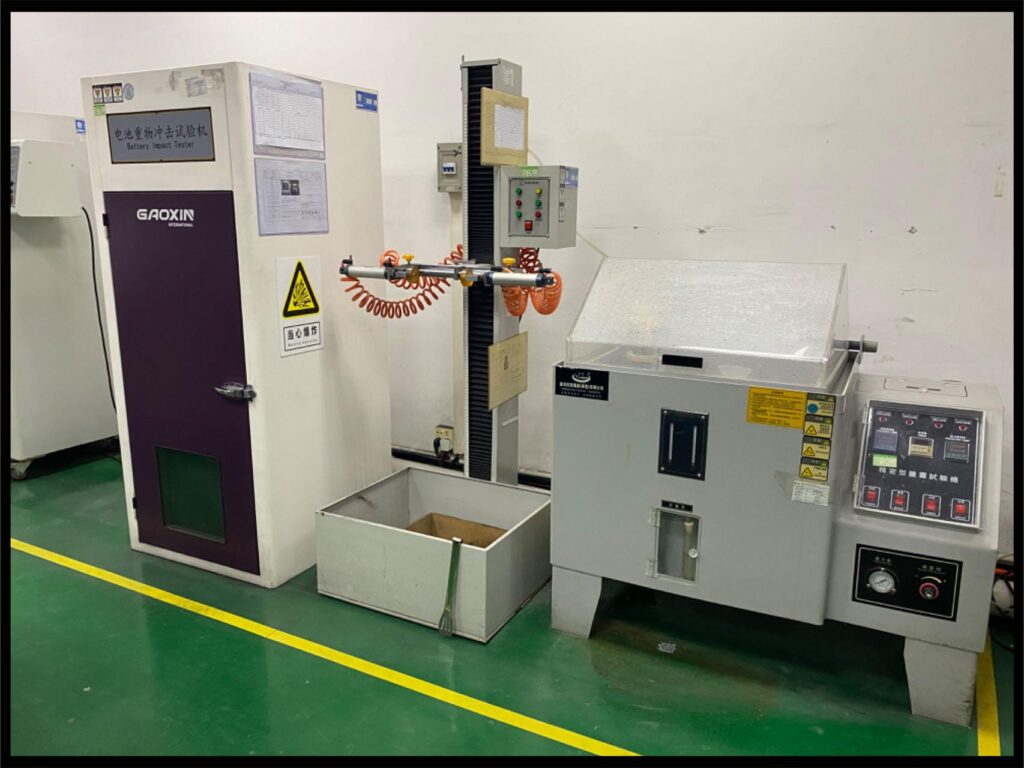
Connect geometry to electrical needs
Available volume must be assessed alongside energy, current and charging requirements. State the measured operating load, peak duration, target runtime, charger design and expected temperature range. A larger capacity request within the same space may require a change in another requirement or may be infeasible. Ask for the assumptions behind each proposed option. Compare finished pack drawings and validated performance rather than selecting the highest mAh figure offered for a nominal footprint without considering the complete design.
Verify the design through the product lifecycle
Plan sample installation and operational checks in the actual device, including the intended assembly process and service procedure. Record the pack drawing, cell model, protection design and label revision as one baseline. Request guidance for storage, handling and replacement, and identify which documents apply to the proposed model. Jetray has a public LiPo category, but custom shape, capacity and protective construction must be confirmed for the specific project. Treat early illustrations as concepts until drawings and samples establish the production design. Review the proposed assembly sequence with production staff, including how the pack is installed without loading its cables or pouch.
Bring these points into the inquiry.
Use the checklist to organize a project discussion, then request the exact model specification, drawing and relevant evidence.
| Review point | Information to agree with the supplier |
|---|---|
| Document the complete envelope | Share dimensions, tolerance, lead length and connector direction. Allow for the manufacturer's mechanical guidance. |
| Describe the charge system | Provide the charger or charging IC details, voltage limits and temperature monitoring requirements. |
| Validate the assembled device | Evaluate the battery in its actual enclosure under normal and expected worst-case operating conditions. |
Sources & further reading
Prepared for the lithium polymer batteries collection. General engineering guidance does not replace a model-specific datasheet or application validation. Source review: 4 November 2026.