The practical answer.
An OEM should obtain a model-specific storage instruction and maximum installed envelope, then treat abnormal swelling as a nonconformance requiring isolation and supplier assessment. A generic clearance percentage cannot establish that a swollen pack is safe. Keep storage history, dimensional measurements and the approved enclosure drawing connected so a fit problem is not concealed by changing the housing or compressing the pouch.
- Storage conditions and dimensional limits must come from the proposed cell and finished-pack specification.
- An allowance for approved dimensional variation is different from permission to use an abnormally swollen battery.
- Measure without imposing uncontrolled pressure; record the method and condition with every dimension.
- A normal voltage reading does not override evidence of physical damage.
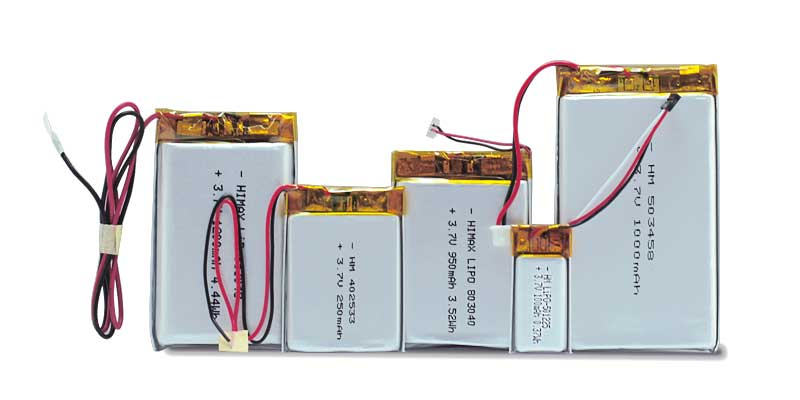
Start with the decision the team actually has to make
A purchasing team receives pouch packs that fit a prototype, stores them while tooling is delayed, and later finds that several assemblies no longer sit comfortably in the enclosure. Three different decisions now compete for attention: whether the stock remains acceptable, whether the housing has sufficient approved space, and whether the storage process needs correction. Treating all three as a question about nominal thickness hides the evidence needed to resolve them. This article offers an editorial decision framework rather than a universal battery operating instruction.
Create a case record before changing the product. Identify the pack part number and revision, supplier lot, quantity affected, receiving date, storage locations, packaging condition and equipment configuration. Record whether the observation was made before charging, after a normal approved charge, or after installation. Keep the affected stock separate from the approved flow. A clear record allows the battery supplier and responsible product engineer to distinguish a dimensional question from a potentially damaged product without guessing from an isolated photograph.
Ask for an envelope defined by condition, not just a drawing number
The useful document is a controlled drawing for the finished pack with the conditions behind its dimensions. Ask which value is nominal, which is the manufacturing maximum, and which installed allowance the manufacturer requires over the intended service conditions. Clarify the state of charge, measurement temperature, rest period and permitted measuring contact pressure. If the supplier has not supplied lifecycle thickness guidance, record that gap; do not manufacture a swelling percentage by comparing pictures of unrelated cells.
Distinguish the active pouch body, sealed edges, tab region, protection board and wire exit. A thickness measurement over a protection board is not interchangeable with one over the cell body. Nor does a larger empty cavity automatically produce a suitable mounting arrangement: the device still needs approved support, insulation and protection from local contact loads. This article concerns evidence for storage and dimensional release; the separate mechanical-envelope guide covers the broader layout brief.
| Field | Ask the supplier | Record with the answer |
|---|---|---|
| Drawing limit | Is this a bare-cell or finished-pack maximum? | Part number and drawing revision |
| Measurement condition | At what charge state, temperature and contact method? | Method reference and instrument |
| Installed allowance | What model-specific clearance and support are required? | Approved enclosure interface |
| Abnormal condition | What observations require isolation and assessment? | Disposition owner and escalation route |
Keep storage guidance tied to the supplied product
Storage is an operating condition of the supply chain, even when the battery is not powering a device. Obtain the approved temperature, humidity, charge-state and review-interval instructions for the exact product. VARTA's CellPac technical handbook separates storage and operating information by model; it is a useful example of document structure, not a specification for Jetray products. Avoid copying another manufacturer's numerical storage window into an incoming-inspection instruction for a different pack.
Write down who checks stock and what triggers a review. Useful triggers include a delayed build, an environmental excursion, packaging damage, movement between storage areas or a changed production schedule. A calendar reminder alone does not prove a pack remains suitable. Equally, an old delivery date alone does not prove that a cell has failed. Age, actual storage exposure and the manufacturer's limits belong in the same decision. Keep retained supplier instructions available to receiving and manufacturing staff, rather than only in an engineer's email.
Separate normal variation from an abnormal physical observation
EEMB's manufacturer FAQ identifies several possible contributors to polymer-cell swelling, including electrical abuse, heat and damage. Those possibilities do not let a buyer diagnose a particular pack from appearance. General government battery-handling guidance also treats bulging or damaged lithium batteries as unsuitable for normal use. The practical procurement response is to stop routine use of the affected item and obtain a documented assessment; it is not to establish a new acceptable thickness after the stock has arrived.
Do not puncture, reshape, press flat, bend or intentionally discharge a suspect pouch as an improvised inspection. Staff should follow the organization's approved battery incident and isolation procedure, with competent support for damaged material. This distinction matters when schedules are tight: a fit test is not an abuse test, and an enclosure lid is not a calibrated compression fixture. A pack that seems electrically functional can still have an unresolved physical nonconformance.
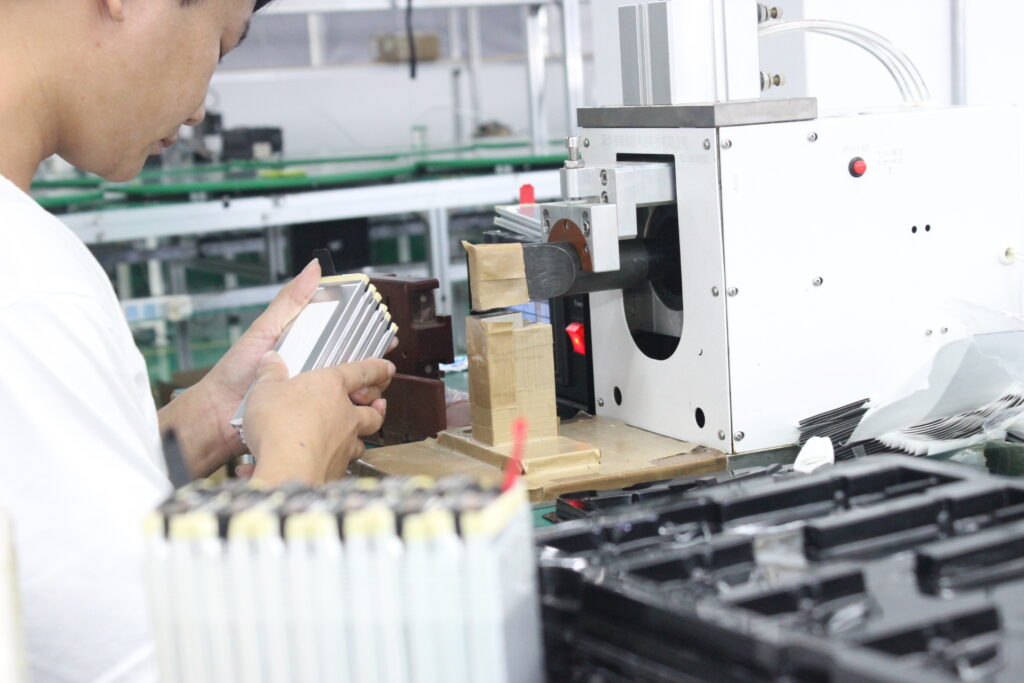
Use a dimensional budget without inventing a safety allowance
A simple stack-up can expose an incomplete drawing. Suppose an enclosure has a minimum internal height of 6.6 mm, while the proposed finished-pack maximum is 5.8 mm and approved surrounding insulation occupies 0.3 mm. The arithmetic leaves 0.5 mm before other tolerances, adhesive variation, mounting details or any manufacturer-required allowance. That remaining space is a budget to review, not a declaration of safe swelling capacity. These are invented planning inputs, not dimensions or limits of a Jetray product.
Ask the mechanical engineer to identify every contributor and its controlling document. Where a value is unknown, leave it visibly unresolved. A drawing that combines a supplier maximum with a typical adhesive thickness may look precise while mixing incompatible confidence levels. Consider assembly variation and the actual contact geometry. The approval should state which assumptions were confirmed by drawings, which were measured on representative assemblies and which still require supplier clarification before release.
Build a receiving and storage record that survives a handover
The record should let a second person reconstruct what happened without interpreting private shorthand. Preserve the supplier lot marking and its relationship to carton and internal stock identifiers. If a carton is divided, create child containers linked to the original lot instead of discarding the outer label. Associate photographs with the item identifier and observation time. Avoid claiming cell-level serialization when only carton-level traceability was supplied; state the actual level and its limitations.
An inspection result needs the method as well as the number. Note instrument identification, measurement locations, environmental condition and whether the assembly was removed from protective packaging. Keep the original result if a repeat is taken, together with the reason for repeating it. Repeatedly measuring until an item fits a limit creates selection bias. Supplier disposition, accepted exceptions and rejected quantities should remain visible alongside the original purchase specification.
- Check identification and approved documents before unpacking stock for installation.
- Record packaging and physical observations without applying uncontrolled force.
- Compare measurements only with limits defined for the same condition and assembly.
- Hold unresolved material outside the released production flow.
- Obtain a signed supplier/product-engineering disposition and preserve the evidence.
Turn the finding into an enclosure-release decision
An enclosure can be released when the proposed assembly, allowable variation and mounting approach are defined and the relevant device evaluation supports them. It should not be released because one fresh sample closes successfully. Ask what the test represents: a production-intent battery or an early reference, a new sample or stored stock, an open bench or a finished housing. Document any limits on how far that evidence can be extended to the order being approved.
Jetray's 11.1 V 2300 mAh and 7.4 V 2000 mAh polymer catalogue references are useful starting points for discussing a project. Their listing does not establish the current storage policy, dimensional growth, stock status or exact construction for an order. Request an approved pack drawing and storage instruction with the quotation. A precise inquiry asks what evidence can be supplied; it does not convert a website family image into validation.
Agree the commercial handling of unresolved material before ordering: who receives the evidence packet, how stock is identified while held, and which party authorizes return or replacement. Do not send a suspect battery through an ordinary return channel without the responsible shipping assessment. This closes the decision loop without confusing a purchasing concession with engineering release. An accepted credit or replacement shipment does not retrospectively demonstrate that the original affected pack was suitable for use.
Frequently asked questions
Can we specify a universal ten percent expansion gap?
No universal percentage is established here. Ask the manufacturer for the specific finished assembly, conditions and mounting guidance. A large geometric gap does not resolve abnormal swelling, seal damage or an inappropriate support method.
Does a normal open-circuit voltage release a visibly changed pack?
No. Electrical and physical evidence answer different questions. Preserve the observation, isolate the item according to the approved procedure and obtain competent disposition rather than overruling the physical finding with a voltage measurement.
What should the buyer request before a delayed order is installed?
Request the current model-specific storage instruction, lot history, any required reinspection criteria and the approved installation drawing. Agree who can release stock after an excursion or extended hold, and retain that decision with the affected lot.
Sources & further reading
- EEMB manufacturer explanation of polymer-cell swelling ↗
- VARTA CellPac LITE technical handbook, model-specific storage and operating information ↗
- U.S. Army battery handling guidance ↗
AI-assisted editorial procurement education. No named engineer review or Jetray test result is claimed. Examples are planning arithmetic; product limits and abnormal-battery disposition require the responsible manufacturer and qualified product team.
Prepared for the lithium polymer batteries collection. General engineering guidance does not replace a model-specific datasheet or application validation. Source review: 5 November 2026.